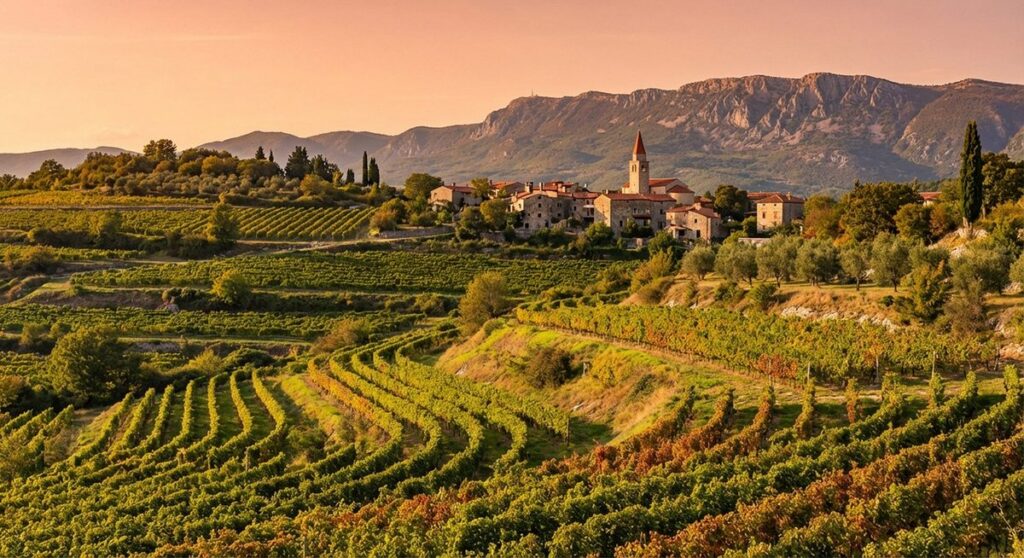
Tucked between the limestone plateau of the Karst and the southern fringes of the Julian Alps, the Vipava Valley is one of those places that makes you wonder why it took so long to find. While coach tours clog the shores of Lake Bled and day-trippers jostle for selfies on the Adriatic coast, this sun-drenched corridor of vineyards, medieval villages, and quiet country roads remains almost entirely off the international radar.
That is starting to change — slowly. And for good reason. The Vipava Valley produces some of the most distinctive wines in Central Europe, harbours a food culture rooted in centuries of Italian and Slavic crossover, and offers cycling terrain that rivals anything in Tuscany or Provence. All without the crowds, the inflated prices, or the feeling that you arrived ten years too late.
The Burja: A Wind That Shapes Everything
You cannot understand the Vipava Valley without understanding the Burja. This fierce northeastern wind — a katabatic phenomenon that pours down from the Nanos plateau — is the defining force of the region. It shapes the architecture (low stone houses, heavy shutters), the agriculture (vines trained close to the ground), and even the local character.
The Burja can reach speeds of 200 km/h in extreme bursts. In winter, it arrives cold and dry, stripping moisture from the air and clearing the sky to an almost unreal blue. In summer, it is less frequent but still present. Locals speak of it the way coastal people speak of the sea: with respect, complaint, and a kind of pride. For visitors, the Burja is mostly an inconvenience on cycling days and a conversation starter at every winery. Check the live weather conditions before planning outdoor activities in the valley — the Burja can shift conditions rapidly.
The Wines: Zelen, Pinela, and the Natural Wine Revolution
The Vipava Valley’s calling card is its indigenous grape varieties. Zelen and Pinela are white grapes found nowhere else on Earth — literally endemic to this valley. Zelen produces wines with a distinctive herbal, almost saline character: mineral, dry, with a green-tinged freshness that justifies its name (zelen means “green” in Slovenian). Pinela is softer, rounder, with stone fruit and floral notes — an everyday wine that drinks far above its weight class.
But the real story of Vipava wine in the past decade has been the rise of natural and orange winemaking, and the valley has become one of Europe’s most exciting addresses for skin-contact whites and minimal-intervention reds.
Key Wineries Worth Visiting
- Guerila (Biodynamic & Natural) — Zmago Petrič is one of Slovenia’s most important natural wine producers. His orange-macerated whites and unfined reds have earned international recognition. The tasting room is unpretentious; the wines are anything but. Book ahead.
- Burja Estate — Primož Lavrenčič practises biodynamic viticulture on steep terraced slopes above the valley floor. His Burja Blanc (a Zelen-Malvazija blend) is a benchmark wine. The estate also produces an exceptional extra-virgin olive oil.
- Batič — One of the pioneers of organic winemaking in Slovenia, the Batič family has been farming these hillsides for generations. Their Zaria (a field blend aged in acacia wood) is unlike anything you have tasted before.
- Sutor — A smaller, boutique operation producing precise, terroir-driven wines. Less well-known than Guerila or Batič, which is part of the appeal.
- Tilia Estate — Premium wines with a modern sensibility. Their single-vineyard Pinela demonstrates what the grape can achieve when taken seriously.
Most wineries welcome visitors by appointment. Do not expect Napa Valley tasting rooms with gift shops — these are working farms where the winemaker will likely pour for you personally.
Villages and Landmarks
Vipava Town
The town of Vipava itself is a quiet, handsome settlement built around a series of natural springs where the Vipava River emerges from underground. Walking paths follow the water through the town centre, past old stone houses and small bridges. It is not dramatic or monumental — it is simply pleasant in a way that rewards slow exploration.
Štanjel
Perched on a hilltop above the western edge of the valley, the medieval village of Štanjel is one of the most photogenic settlements in the Karst. The fortified walls, the Gothic church of St. Daniel, and the restored Ferrari Garden (designed by architect Max Fabiani in the 1920s, with a system of rainwater collection pools and Mediterranean plantings) make this a worthwhile half-day stop. The village is largely car-free within the walls — park below and walk up.
Zemono Manor
This Renaissance hunting lodge, built in the 17th century for the Lanthieri noble family, has been restored and now operates as one of Slovenia’s finest restaurants. The kitchen focuses on hyper-local ingredients — Vipava Valley wines, Karst pršut, seasonal game, valley herbs — served in a dining room with frescoed ceilings. Reservations are essential, especially on weekends.
Rihemberk Castle
The ruins of Rihemberk (also known as Rifemberク or Branik Castle) sit on a ridge overlooking the valley from the south. Dating to the 13th century, the fortification offers panoramic views across the vineyards to Nanos and beyond. It is one of over 500 castle sites in Slovenia — the castle database covers the full inventory. A short marked trail leads up from the village of Branik.
Cycling the Valley
The Vipava Valley floor is relatively flat, making it one of the best cycling destinations in Slovenia for riders who prefer vineyards to mountain passes. Quiet roads wind through villages like Planina, Ajdovščina, Vipava, and Col, with very little traffic outside of the main E-road.
A comfortable day loop of 40–60 km covers the valley floor from Ajdovščina to Vipava and back through the vineyard hills, with stops at wineries along the way. More ambitious riders can climb out of the valley toward Nanos or the Col plateau for serious elevation and rewarding views. The region also connects to broader hiking routes for those who want to combine cycling with walking. E-bike rentals are available in Ajdovščina and increasingly at guesthouses throughout the valley.
The Vipava River
The Vipava River flows the entire length of the valley before joining the Soča system. In summer, locals swim in natural pools along its course — ask at any guesthouse for current recommendations, as the best spots shift with water levels. Kayaking is possible on calmer stretches, though the river is modest in scale compared to the Soča. The riverbanks also host some of the valley’s best waterfall sites after heavy rains, when tributaries cascade down from the Nanos plateau.
Food: Where Karst Meets the Valley
The Vipava Valley sits at the culinary crossroads of Mediterranean and Central European traditions. Expect:
- Pršut — dry-cured ham from the neighbouring Karst, wind-dried by the Burja. Sliced thin and served with bread, olive oil, and a glass of Zelen.
- Štruklji — rolled dumplings filled with tarragon, cottage cheese, or walnuts. A Slovenian staple, but the Vipava version often uses local herbs.
- Jota — a hearty bean and sauerkraut stew with pork, common across the Karst and Vipava regions. A winter dish that pairs improbably well with lighter white wines.
- Local olive oil — the valley is at the northern edge of olive cultivation, and the oils produced here are peppery, intense, and excellent.
Why Most Tourists Miss It
The Vipava Valley has no single headline attraction. There is no iconic lake, no world-famous cave, no Instagram-ready viewpoint that goes viral every summer. What it has is depth: a wine culture built on indigenous grapes, a landscape shaped by a unique wind, villages where tourism infrastructure exists but does not dominate, and food that reflects genuine terroir rather than tourist expectations.
Most visitors to Slovenia follow the well-established Ljubljana–Bled–Coast triangle. The Vipava Valley lies just south of that route, accessible in under an hour from Ljubljana, yet it remains a place where you can sit at a winery terrace on a Saturday afternoon and be the only foreign visitor.
For anyone planning a trip, the essential Slovenia planning guide covers the practical basics — motorway vignettes, currency, and seasonal considerations — that apply equally to the Vipava Valley.
That will not last forever. But for now, it is one of the best-kept secrets in European wine travel.
Frequently Asked Questions
How do I get to the Vipava Valley from Ljubljana?
The Vipava Valley is approximately 60 km southwest of Ljubljana, reachable in about 50 minutes by car via the A1 motorway toward Nova Gorica. Exit at Ajdovščina or Vipava. Regular bus services connect Ljubljana to Ajdovščina (the valley’s largest town), though a car or bicycle gives far more flexibility for visiting wineries and villages. A valid motorway vignette is required for the A1.
What are the best wineries in the Vipava Valley?
The most acclaimed wineries include Guerila (natural and orange wines), Burja Estate (biodynamic), Batič (organic pioneer), Sutor (boutique), and Tilia Estate (premium single-vineyard wines). Most welcome visitors by appointment. The valley is particularly known for its natural and skin-contact white wines made from indigenous Zelen and Pinela grapes.
What is the Burja wind?
The Burja (also spelled Bora) is a powerful katabatic wind that descends from the Nanos plateau into the Vipava Valley and the Karst region. It blows from the northeast, arriving cold and dry, and can reach gusts of up to 200 km/h in extreme conditions. The Burja is most common in winter and spring. It plays a crucial role in local agriculture — drying pršut (cured ham) and influencing vine-training methods — and is a defining feature of the region’s identity.
Is the Vipava Valley worth visiting?
Absolutely — particularly for travellers interested in wine, cycling, or experiencing a part of Slovenia that has not yet been shaped by mass tourism. The valley offers indigenous grape varieties found nowhere else, excellent local cuisine, medieval villages like Štanjel, and a relaxed pace that contrasts sharply with busier destinations like Bled or the coast. Two to three days allows a thorough exploration of the wineries, villages, and cycling routes.
Can you cycle in the Vipava Valley?
Yes, the Vipava Valley is one of Slovenia’s best cycling destinations. The valley floor is relatively flat with quiet roads winding through vineyards and villages, making it accessible for recreational cyclists. A typical day loop covers 40–60 km between Ajdovščina and Vipava. E-bike rentals are available locally, and more experienced riders can tackle climbs toward the Nanos plateau or Col for serious elevation gain.
What are Zelen and Pinela wines?
Zelen and Pinela are indigenous white grape varieties grown exclusively in the Vipava Valley. Zelen (meaning “green” in Slovenian) produces dry, mineral wines with herbal and saline notes. Pinela is softer and rounder, with stone fruit and floral character. Both are autochthonous varieties — they exist nowhere else in the world — making them a unique draw for wine enthusiasts seeking something genuinely different.
When is the best time to visit the Vipava Valley?
Late spring (May–June) and early autumn (September–October) are ideal. Spring brings wildflowers and mild temperatures perfect for cycling, while autumn offers the grape harvest, wine festivals, and warm golden light across the vineyards. Summer is hot but pleasant, with swimming possible in the Vipava River. Winter can be challenging due to the Burja wind, though the crisp clear days between gusts have their own appeal.
Where should I stay in the Vipava Valley?
Ajdovščina is the largest town and has the most accommodation options, including small hotels and guesthouses. The town of Vipava itself offers a quieter base closer to several wineries. For a more rural experience, look for tourist farms (turistične kmetije) and vineyard guesthouses in villages like Planina, Goče, or Slap. Štanjel has a handful of rooms within the medieval walls. Booking directly with properties often yields better rates than online platforms.