Tourist Tax in Slovenia: What It Is and What You’ll Pay
Every visitor staying overnight in Slovenia is subject to a tourist tax (turistična taksa). This is not optional, not negotiable, and not a scam — it is a national requirement set by the Promotion of Tourism Development Act. The good news: it is modest, transparent, and collected automatically by your accommodation provider.
The tourist tax rate is set by each municipality individually, but it typically falls between €1.00 and €3.00 per person per night. Ljubljana charges €3.13 (the highest in the country), Bled charges €2.50, Piran around €2.50, and smaller rural municipalities often charge €1.00–€1.50. On top of the municipal rate, an additional promotional tax of 25% of the base rate is added, which goes to the Slovenian Tourist Board for national marketing.
So if you stay three nights in Ljubljana, expect roughly €3.91 per person per night in total tourist tax — about €11.73 for a solo traveller’s three-night stay. It is always listed separately on your invoice.
Who Pays and Who Is Exempt
The tax applies to all overnight guests regardless of nationality, including Slovenian citizens staying outside their municipality of residence. However, several categories of guests are exempt or pay a reduced rate:
- Children under 18 — exempt from tourist tax entirely
- Students on organised school trips — exempt
- Persons with disabilities (and one accompanying person) — exempt
- Members of diplomatic missions — exempt
- Guests aged 18–29 and over 65 — entitled to a 50% reduction in many municipalities
- Guests staying for medical treatment at certified health resorts — reduced rate
Hotels, hostels, guesthouses, campsites, and Airbnb-type rentals all collect the tax and remit it to the municipality. If you are staying in private accommodation (a friend’s house, for example) for more than one night, the host is legally required to register you with the local administrative unit within 12 hours of arrival. In practice, this registration requirement is strictly enforced for commercial accommodation and somewhat loosely monitored for genuinely private stays.
For a broader picture of what Slovenia costs day-to-day, see our honest cost guide written from a resident’s perspective.
Entry Requirements: Visas, Schengen, and ETIAS
Slovenia and the Schengen Area
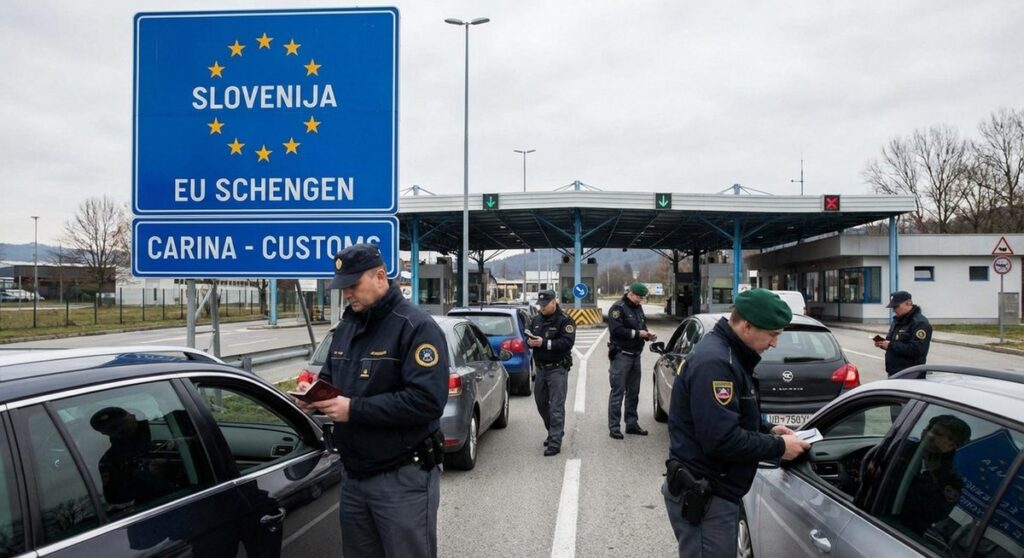
Slovenia has been a member of the Schengen Area since December 2007. This means there are no routine border checks when arriving from another Schengen country (Austria, Italy, Hungary, Croatia). If you fly into Ljubljana Jože Pučnik Airport from a non-Schengen origin, you will pass through Schengen border control on arrival.
Being in Schengen also means that your time in Slovenia counts toward the 90/180-day rule: non-EU nationals from visa-exempt countries may spend a maximum of 90 days within any rolling 180-day period across the entire Schengen zone. Days spent in France, Germany, or Greece all count toward the same 90-day allowance as days in Slovenia.
EU, EEA, and Swiss Citizens
Citizens of all EU member states, EEA countries (Norway, Iceland, Liechtenstein), and Switzerland can enter Slovenia with a valid national ID card or passport. No visa is needed, and there is no limit on the length of stay. If you plan to stay longer than three months, you should register your residence at the local administrative unit.
Visa-Free Countries (Including the US, UK, Canada, and Australia)
Citizens of the following countries (among others) can enter Slovenia and the Schengen Area without a visa for up to 90 days in any 180-day period:
- United States
- United Kingdom
- Canada
- Australia
- New Zealand
- Japan
- South Korea
- Israel
- Brazil, Argentina, Chile, Mexico
- UAE, Singapore, Malaysia
Your passport must be valid for at least three months beyond your planned departure date from the Schengen Area and must have been issued within the last ten years. This catches out more travellers than you might expect — check your passport expiry date before booking flights.
ETIAS: The New Pre-Travel Authorisation
The European Travel Information and Authorisation System (ETIAS) is a pre-travel screening programme that will apply to visa-exempt non-EU nationals. Once operational, travellers from countries like the US, UK, Canada, and Australia will need to complete an online application and pay a small fee (€7, free for those under 18 or over 70) before travelling to any Schengen country, including Slovenia.
ETIAS authorisation will be valid for three years or until your passport expires, whichever comes first. It does not replace the 90/180-day rule — it simply adds a pre-screening step. The system has been delayed multiple times; check the official ETIAS website for the current launch timeline before your trip.
Countries That Do Need a Visa
If your country is not on the Schengen visa-exempt list, you will need to apply for a short-stay Schengen visa (Type C) at the Slovenian embassy or consulate in your country, or at the embassy of the Schengen country that is your main destination. Processing typically takes 15 calendar days but can extend to 45 days in peak season. Apply early.
Health Insurance Requirements
EU citizens should carry a valid European Health Insurance Card (EHIC) or its replacement, the Global Health Insurance Card (GHIC) for UK nationals. This provides access to state-provided healthcare during your stay under the same conditions as Slovenian residents.
Non-EU visitors are strongly advised to carry comprehensive travel insurance that covers medical treatment and emergency repatriation. While not always checked at the border, it is technically a requirement for Schengen visa holders and is genuinely essential given that a mountain rescue helicopter callout in the Julian Alps can cost several thousand euros. Slovenian hospitals will treat emergencies regardless of insurance status, but you will be billed.
For more practical preparation tips, read our guide on 20 things to know before you visit Slovenia.
Customs Allowances: What You Can Bring In
If arriving from outside the EU, the following duty-free allowances apply per adult:
- Tobacco: 200 cigarettes, or 100 cigarillos, or 50 cigars, or 250g of smoking tobacco
- Alcohol: 1 litre of spirits over 22% ABV, or 2 litres of wine/sparkling wine; plus 4 litres of still wine and 16 litres of beer
- Other goods: Up to €300 in value (€430 if arriving by air or sea)
- Cash: If carrying €10,000 or more (or equivalent in other currencies), you must declare it at customs
If arriving from another EU country, there are no customs checks and no limits on goods for personal use.
Travelling with Pets
Dogs, cats, and ferrets entering Slovenia from another EU country need a valid EU Pet Passport showing a microchip and up-to-date rabies vaccination (administered at least 21 days before travel). From non-EU countries, requirements are stricter: you may need a rabies antibody titre test performed at least 30 days after vaccination and at least three months before entry. Certain dog breeds classified as dangerous in Slovenia (pit bull terriers and related breeds) require a muzzle and leash in public at all times. Check with the Slovenian Administration for Food Safety (UVHVVR) for the latest regulations before travelling with exotic or non-standard animals.
Slovenia’s weather varies dramatically by region and altitude — planning around conditions can save you money and hassle. Check our live weather dashboard powered by ARSO data before you pack.
Frequently Asked Questions
How much is tourist tax in Slovenia?
Tourist tax in Slovenia ranges from approximately €1.00 to €3.13 per person per night, depending on the municipality. Ljubljana is the most expensive at €3.13, while smaller towns typically charge €1.00–€1.50. A 25% promotional surcharge is added on top of the base rate. Hotels and other accommodation providers collect it automatically and list it separately on your bill.
Do Americans need a visa for Slovenia?
No. US citizens can enter Slovenia and the entire Schengen Area without a visa for up to 90 days within any 180-day period. Your passport must be valid for at least three months beyond your planned departure date and issued within the last ten years. Once ETIAS launches, Americans will also need a pre-travel authorisation (a simple online form, not a visa).
Is Slovenia in the Schengen Area?
Yes. Slovenia joined the Schengen Area in December 2007. There are no routine border checks when travelling between Slovenia and other Schengen countries such as Austria, Italy, Hungary, or Croatia. Your time in Slovenia counts toward the 90/180-day allowance that applies across the entire Schengen zone.
What is ETIAS and when does it start?
ETIAS (European Travel Information and Authorisation System) is a pre-travel screening programme for visa-exempt non-EU nationals visiting the Schengen Area. It requires an online application and a €7 fee. Once approved, the authorisation is valid for three years. The launch has been postponed several times — check the official ETIAS website for the current start date before planning your trip.
Do I need travel insurance for Slovenia?
EU citizens should carry a valid EHIC or GHIC card for access to state healthcare. For non-EU visitors, travel insurance with medical and repatriation cover is strongly recommended and technically required for Schengen visa holders. Mountain rescue operations in the Julian Alps can cost thousands of euros, making insurance especially important if you plan to hike.
Do UK citizens need a visa for Slovenia after Brexit?
No. UK citizens remain visa-exempt for short stays of up to 90 days in any 180-day period across the Schengen Area. However, since Brexit, UK nationals must use the non-EU passport queue at border control, their passport must be valid for at least three months beyond the departure date, and they cannot stay beyond 90 days without a residence permit. The EHIC has been replaced by the GHIC for healthcare access.
Are children exempt from tourist tax in Slovenia?
Yes. Guests under 18 years of age are fully exempt from tourist tax in Slovenia. Additionally, guests aged 18–29 and over 65 are often eligible for a 50% reduction, though the exact discount varies by municipality.
How much cash can I bring into Slovenia?
There is no limit on cash you can carry, but if you are entering or leaving the EU with €10,000 or more (or the equivalent in other currencies, cheques, or bearer instruments), you are legally required to declare it at customs. Failure to declare can result in confiscation and fines.
Can I bring my dog to Slovenia?
Yes. From other EU countries, your dog needs a microchip, a valid EU Pet Passport, and an up-to-date rabies vaccination given at least 21 days before travel. From non-EU countries, additional requirements may include a rabies antibody titre test taken at least three months before entry. Pit bull terriers and related breeds must be muzzled and leashed in public throughout Slovenia.
Does Airbnb charge tourist tax in Slovenia?
Yes. All short-term rental hosts in Slovenia, including those listing on Airbnb and Booking.com, are required to collect and remit tourist tax. Some platforms have begun collecting it automatically at checkout, but in many cases the host collects it on arrival. It should always appear as a separate line item. If your host does not charge it, they are technically in violation of Slovenian law.